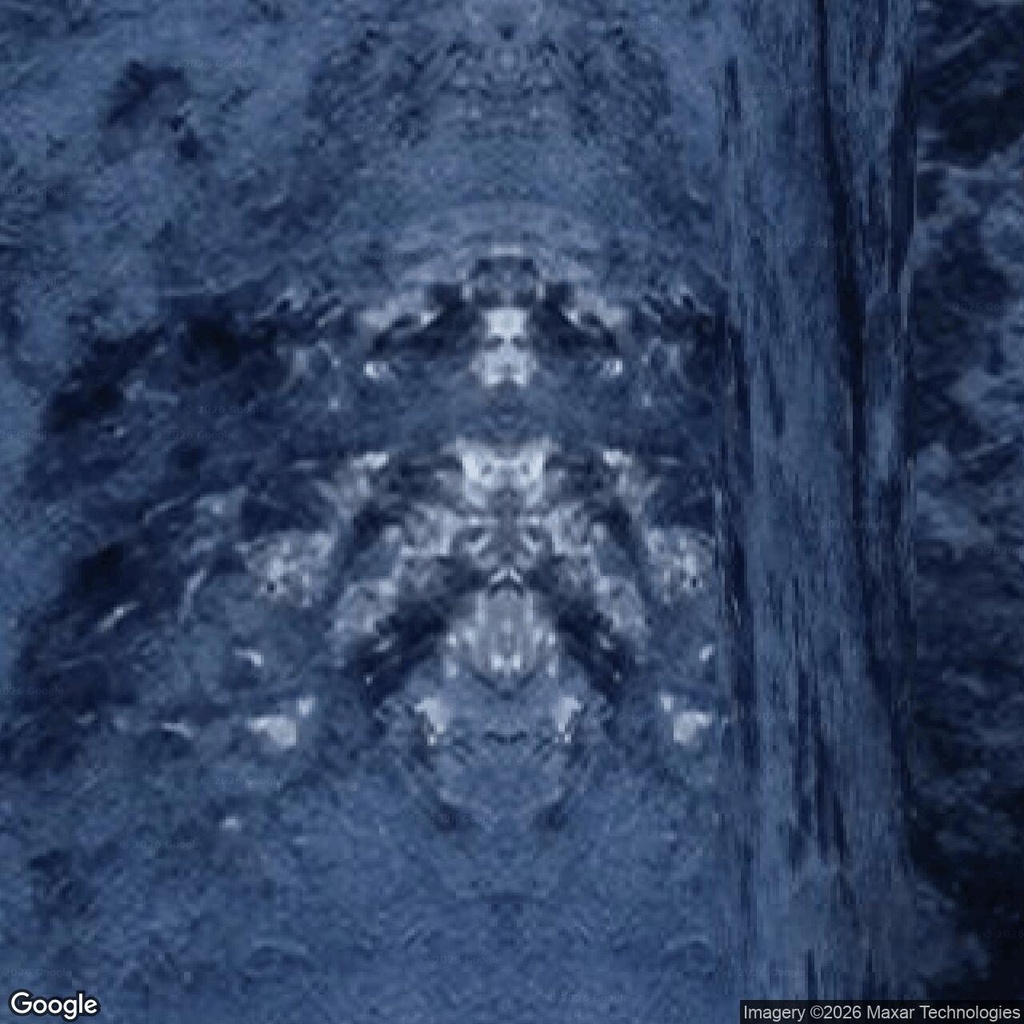
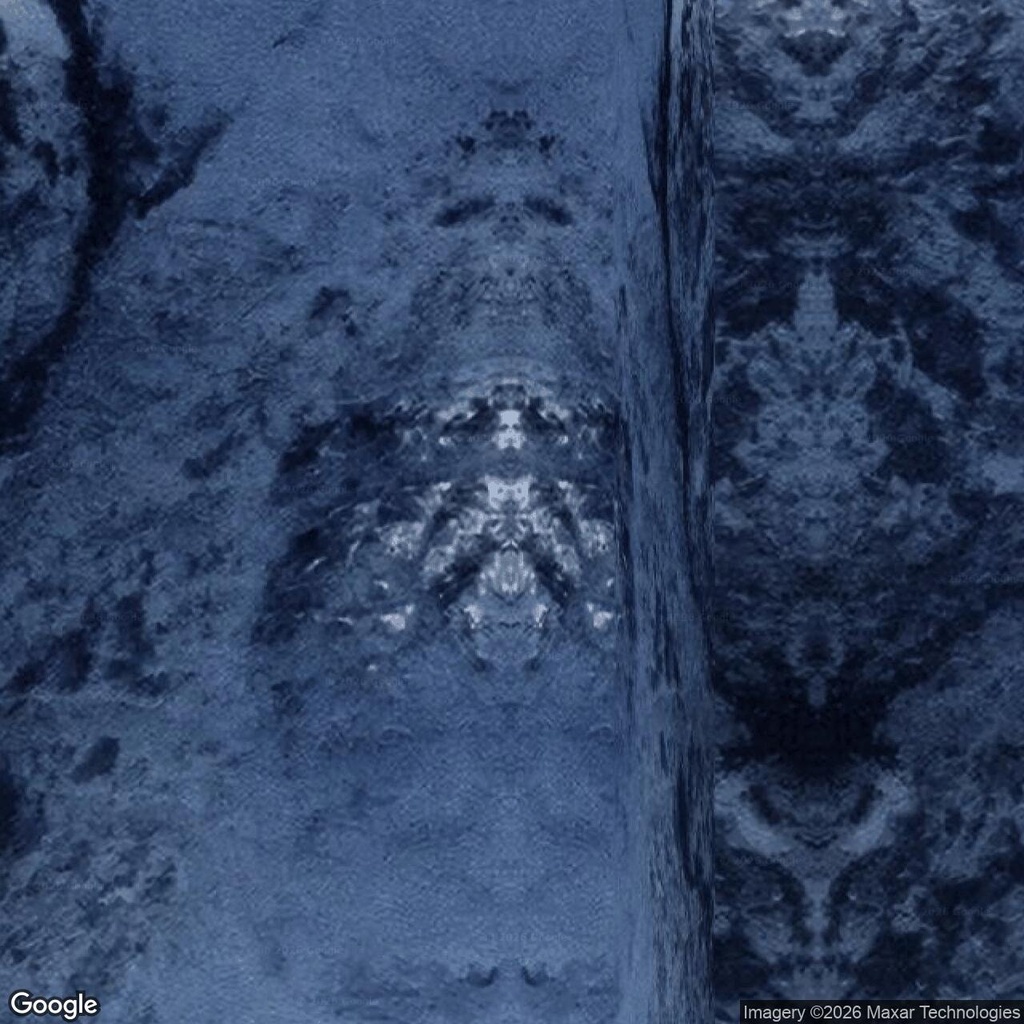
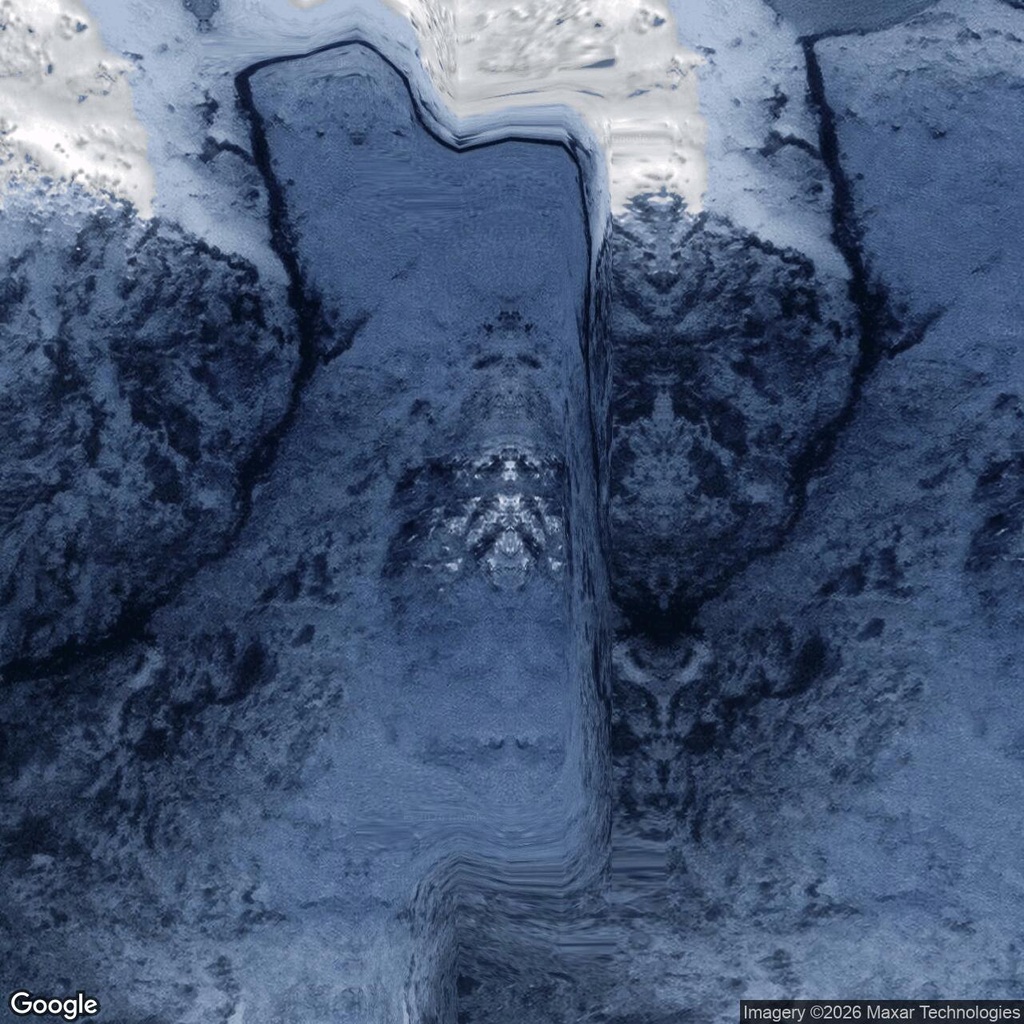
A face seems to stare out of the mountain imagery in this corner of southern Chile. Two dark patches suggest eyes, a pale ridge forms a nose, and the markings below resemble a mouth and chin. In the wider screenshots, the shape stretches into something that could be read as shoulders and an upper body.
Look beside it, though, and another detail stands out: the surrounding textures appear unusually symmetrical. A larger neighbouring shape has the same mirrored quality, with a straight vertical boundary cutting through the image. That repetition is a useful clue when trying to work out what the pictures show.
An imagery or terrain-rendering artifact is a plausible explanation for the symmetry. These screenshots alone do not establish exactly how it was produced, or whether the face-like pattern appears in independent imagery of the same ground.
The resemblance to a face is an example of pareidolia, our tendency to recognise familiar shapes in unrelated patterns. That explains the impression of eyes and a mouth, but not the mirrored textures around them.
For a closer look, compare the tight crop with the wider images in the gallery. The apparent expression draws attention first; the repeated textures around it offer the more useful clue. The coordinates place this discovery in southern Chile, although it has also been shared online under an Antarctica label.
Comments:
No comments yet.