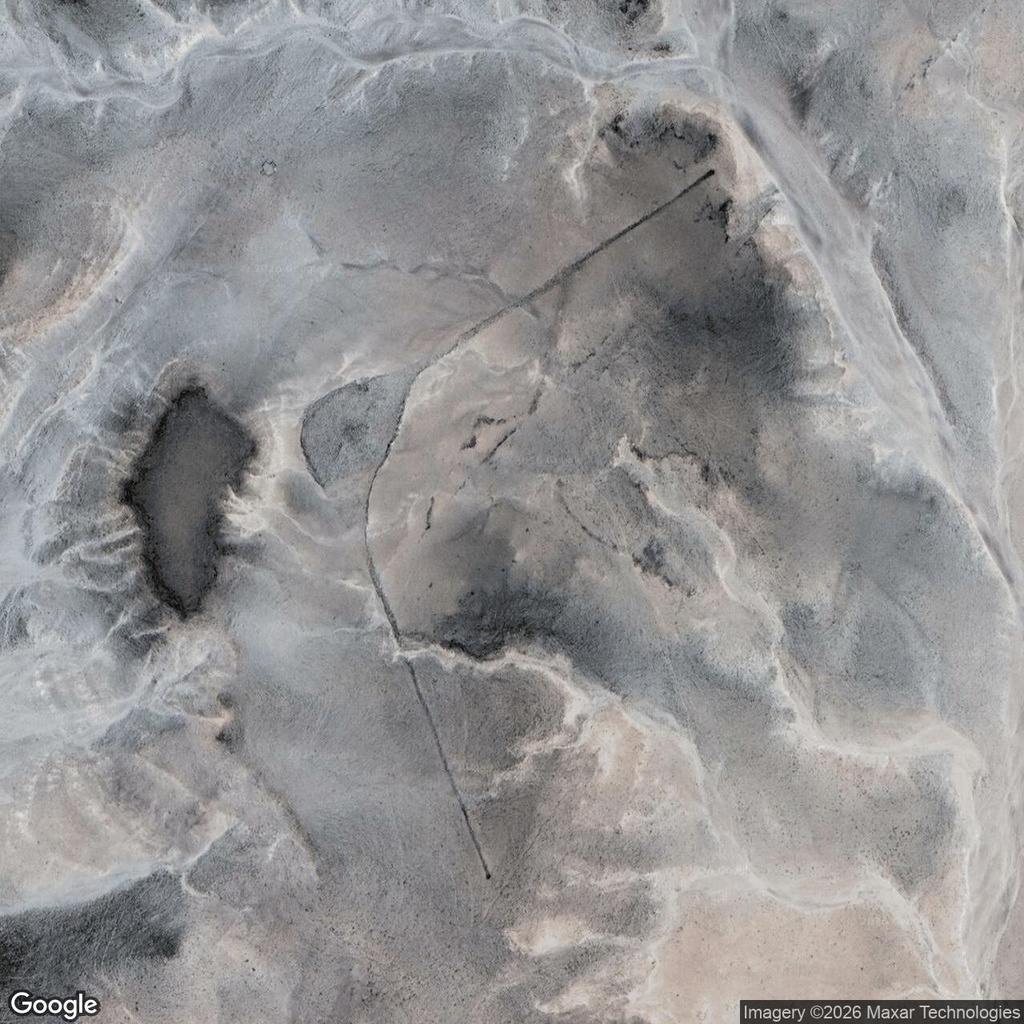
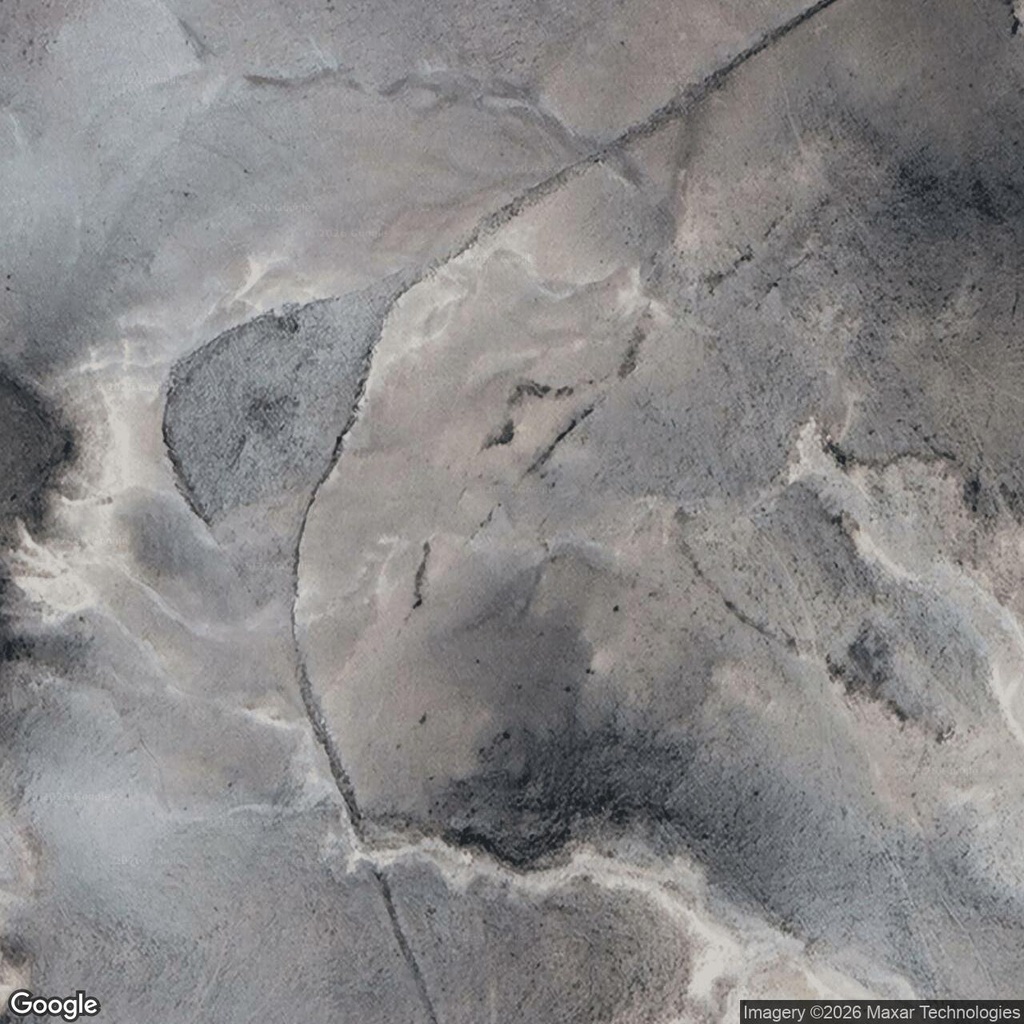
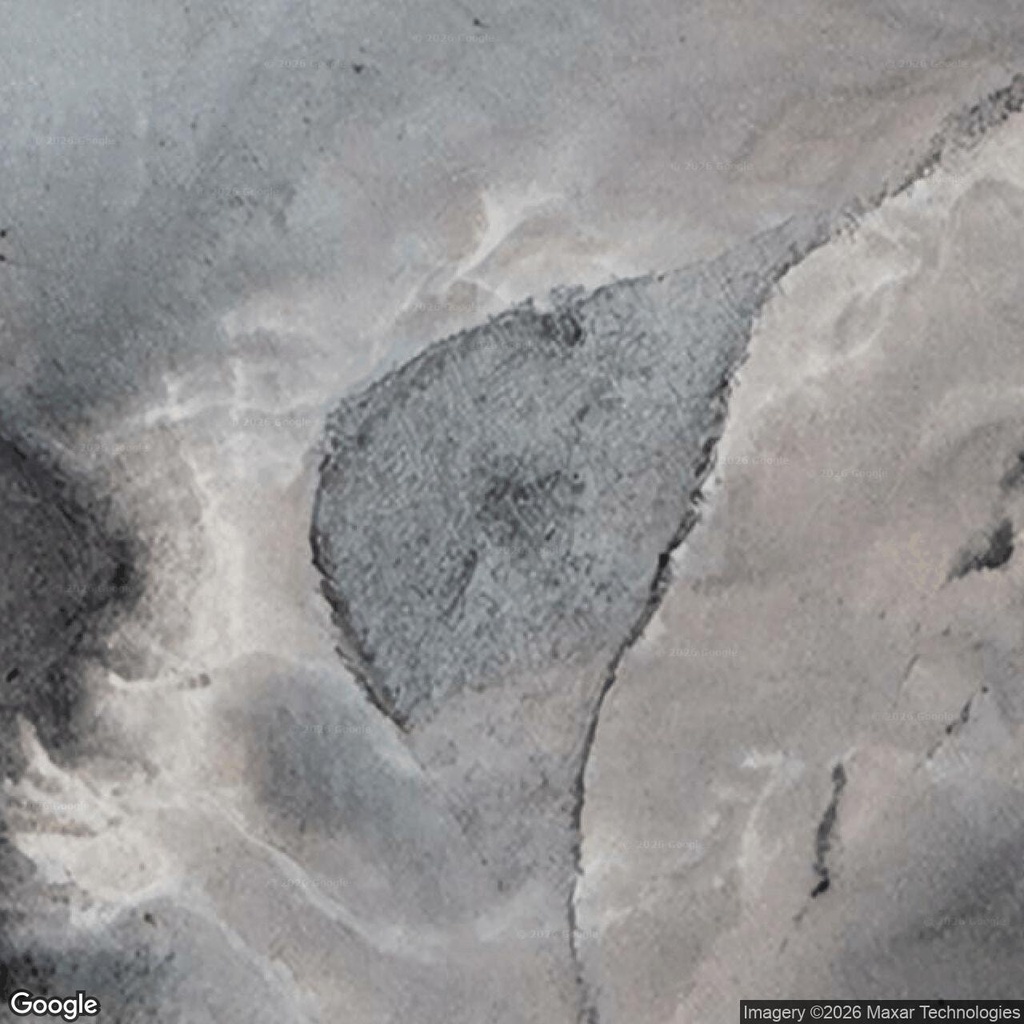
Two thin arms stretch across the rocky ground, meeting a broad, fan-shaped patch of stones. From above, the arrangement resembles an enormous open pair of compasses. The close-up reveals a densely packed surface inside the central feature, contrasting with the narrow lines extending beyond it.
This monument in Algeria belongs to a form commonly called an antenna tomb. The name describes its projecting arms rather than any connection to radio equipment. Travel writer Chris Scott’s account of pre-Islamic Saharan tombs lists an Algerian example at coordinates almost identical to this location. He describes antenna and crescent tombs as burial monuments with arms extending from a central mound.
How old is the antenna tomb?
I have not found an excavation report or a reliable date for this particular monument. Its appearance alone cannot establish when it was built or who was buried here.
Archaeologists have investigated comparable monuments elsewhere in the Sahara. A 2026 excavation study in Western Sahara documented human remains beneath an antennae tumulus and dated the burial to roughly 4,100–4,400 years before 1950. That finding provides evidence for the funerary use and antiquity of one example, rather than a date for every similarly shaped monument.
Here, the wider satellite image is especially useful: it shows how the slender arms spread across the uneven terrain. The closer views bring out the stony centre, but lose much of the outline that makes the structure so distinctive.
Comments:
No comments yet.